☠ New Book — March 2026
How software engineers learn to build with agents
It started with porting the Claude Agent SDK from Python to Go — using Claude Code itself. Over a hundred prompts, countless mistakes, and one realisation: most of the effort was wasted because I didn't know how to direct the work. This book is everything I learned — the practical guide to engineering with AI agents.
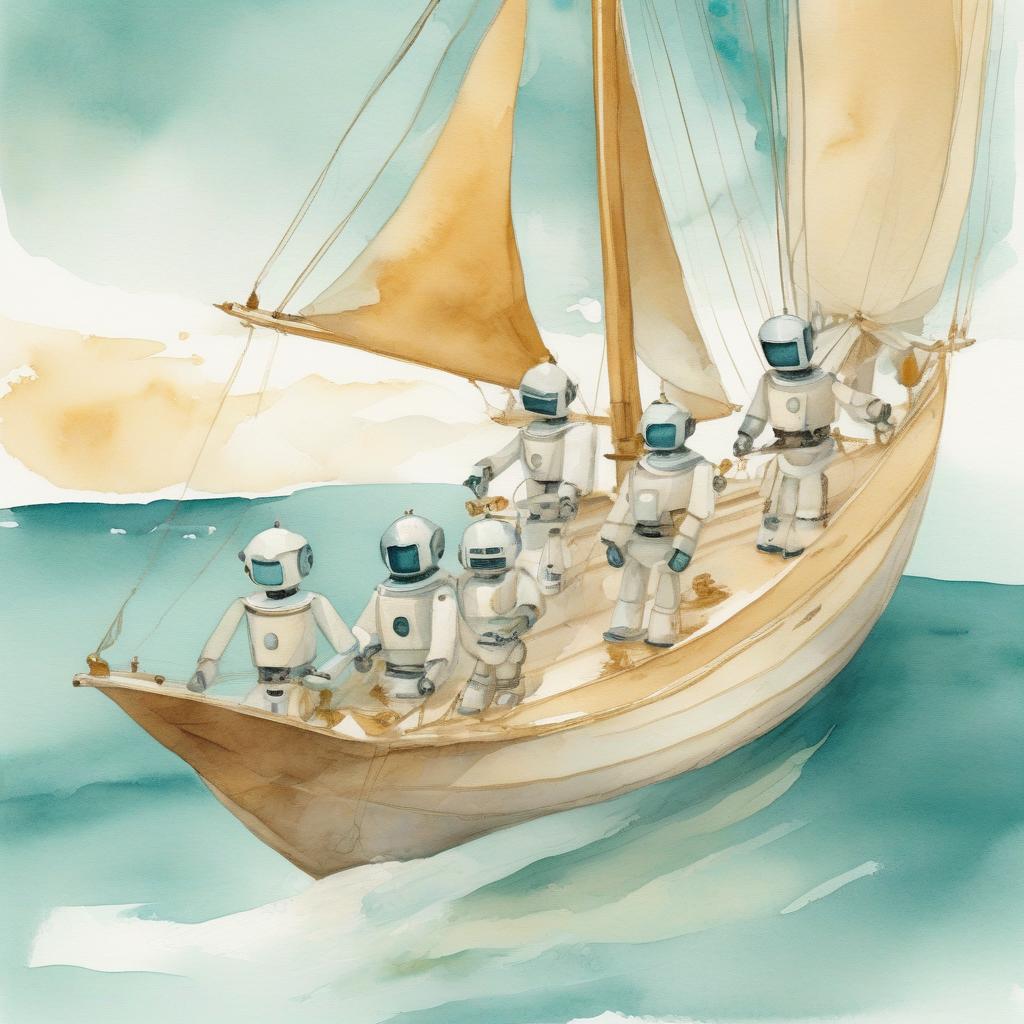
We're moving from writing every line by hand to directing, orchestrating, and collaborating. Less typing, more thinking. Less editor, more engineering.
The tools showed up fast — Copilot, then Claude, then agents that run entire tasks autonomously — and we're all figuring it out in real time.
Systems thinking, taste, judgement, knowing what to build and why — those matter more now, not less. This book shows you how to wield them.
This book started with a boring fintech project — a CRUD app with open banking APIs and heavy i18n. I kicked off the design with Lovable and saw agentic workflows in action for the first time. I wasn't blown away — I could see how it was done. Then the Claude Agent SDK came out, and I used Claude Code to port the entire SDK from Python to Go. It was like watching the best movie in years. The planning, the refactoring, the way it reasoned through Python decorators versus Go interfaces — beautiful. I used over a hundred prompts. Today, with the techniques in this book, I could do it with far fewer. Not because the model got smarter. Because I did.

— From the ForewordI've been a software engineer for a long time. I know what it feels like to have a codebase in your head — to open an editor, navigate to the right file, and just write the thing. That muscle memory, built over years of keystrokes and debugging sessions, is real. It's earned.
And now the ground is shifting under our feet.
18 chapters covering the shift, the tools, and the engineering practices that make agentic work actually work.

The fundamental loop of software engineering is breaking. What it means to go from writing software to engineering it — with a crew of agents at your side.
The single most important skill in agentic engineering isn't prompting — it's context management. Learn to curate what your agents see.
Placing AI tools on a spectrum from autocomplete to autonomous systems. What makes something truly agentic, how agents fail, and the right mental model for working with them.
The trust gradient, permission scoping, approval gates, and environment-specific rules. How to give agents power without giving them the keys to production.
Small commits, descriptive messages, branch-per-task, and worktrees for parallel agents. Git as your undo button and review interface.
Giving agents the freedom to be wrong. Worktrees, containers, and ephemeral environments that make failure cheap and experimentation free.
Tests become the agent's eyes. TDD as a superpower, fast test suites as agent infrastructure, and the virtuous cycle of better tests and more autonomous agents.
Why consistent file naming, formatters, project layouts, and CLAUDE.md files make agents dramatically more effective.
MCP, tool integrations, and connecting agents to databases, monitoring, and project management. How to give agents eyes beyond the filesystem — and the guardrails to do it safely.
Privacy, cost, capability trade-offs, team cost management, and getting started without paying the farm. The practical hybrid approach of matching the model to the task.
How to write effective agent prompts — task decomposition, constraint specification, the prompt-as-spec pattern, and anti-patterns to avoid.
Running agents in parallel, the handover pattern for sequential work, branch-per-agent isolation, and knowing when more agents isn't better.
Using agents in CI/CD — PR pre-screening, overnight agents, cost control in automation, and the trust question when nobody's watching.
War stories from the field — the eager refactorer, the hallucinated library, the infinite loop — plus a diagnostic playbook for systematically debugging agent failures.
The overhead tax, architecture decisions, security-critical code, working with legacy codebases, and the craft argument. Knowing when to put the agent away.
How agent-assisted development changes code review, the junior engineer question, knowledge distribution, compliance and audit trails, hiring, and team rhythms.
The craft isn't dying — it's shedding its skin. What endures, what changes, and why the captain still matters.
What if your pipeline could hack itself before attackers do? Autonomous pentesting with Donna — real scans, real exploits, real findings — and why it needs every guardrail and sandbox principle in the book.
18 chapters for tech-savvy people who don't write code — understand agents, direct them, and build real things.
The horizon is wider than you think. Why this book exists — and why it's for you.
The line between technical and non-technical is dissolving. What's changing, and why it matters for your role.
Every app is a restaurant — front of house, kitchen, and pantry. A plain-language tour of how software actually works.
Observe, plan, act, check — repeat. The mental model that makes everything else click.
The difference between a good instruction and a bad one. The two-captains story that changes how you think about prompts.
An agent can only work with what's on the bench. How to set up the right inputs and check the outputs.
Start tight. Loosen with evidence. How much autonomy to give, and when to pull the reins.
Connecting the agent to the world beyond its window — tools, databases, and integrations.
From idea to working prototype in a weekend. Your first hands-on walkthrough.
The sealed envelope — how the internet keeps secrets. Security explained without jargon.
The principles transfer to everything. A second walkthrough that proves you don't need to be a programmer.
The mistakes are inevitable. The recovery is a skill. Real war stories and how to handle them.
Sometimes the right tool is your own hands. Knowing when agents aren't the answer.
You are the quality control. What it means to review, verify, and direct — not just delegate.
You speak two languages now. How to bridge the gap between technical and non-technical colleagues.
Ten minutes, three times a week. How to stay current without drowning in the firehose.
Which tool do you actually open on Monday morning? A practical guide to your first steps.
Now go build something. You were always technical enough.

Free download
Choose your language and format
La Tripulación Agéntica
La Tripulació Agèntica
Det Agentiske Mandskab
All formats free. Download as many times as you like.
More from the series
Tech-savvy but don't code? Same ideas as the engineering book, translated for non-programmers.
Learn more →Set up your machine, fork a repo, submit a PR. The lab companion to the engineering and crew books.
Learn more →Enjoyed the book? This project is free and always will be.
Buy me a coffeeListen Free
Listen to the full book, chapter by chapter. AI-narrated with a bespoke voice designed by Qwen3-TTS.
Download the full audiobook
Full audiobook files will be available soon. Individual chapters are being added as they are generated.
Listen Free
Listen to the full Crew Member's Guide, chapter by chapter. AI-narrated with a natural voice.
Download the full audiobook
Individual chapters are being added as they are generated.

Your AI guide to The Agentic Crew.
Runs entirely in your browser — private & offline-capable.
 The Agentic Crew